Interreg and CPER projects

ICube conducts research projects across regions and Europe, supported by the Interreg and CPER programmes.

State-region planning contracts (CPER)

The ICube laboratory is involved in three projects funded under the State-Region planning contract (CPER), either as lead partner or consortium member.

The CPER is a joint funding mechanism between the French State and the Regions, designed to support territorial development, particularly in research, innovation, and higher education.

Within this framework, ICube receives funding for concrete initiatives such as the acquisition of scientific equipment, the modernisation of infrastructure, and the development of research platforms. These actions are aligned with regional priorities and tailored to the needs of the territory.

These projects contribute to strengthening applied research, upgrading facilities, and supporting local scientific and technological development.


 

State-Region planning contracts (CPER) - Grand Est region (2021–2027)

The ALLIAGE project aims to further develop the SLICES-FR technological platform in the Grand Est region, in the fields of communications and distributed computing. Through a partnership between ICube and LORIA, the ALLIAGE project provides in Nancy, a remotely accessible computing platform whose servers are fully reconfigurable at the software level. In Strasbourg, the platform offers access to small reprogrammable devices, remotely accessible via radio, i.e., the so-called Internet of Things (IoT).

The ALLIAGE project will enable the co-optimization of the communication and computing infrastructures. In particular, Artificial Intelligence is increasingly used to manage complex telecommunications infrastructures. Instead of relying on large centralized computing centers, the platform makes it possible for researchers to explore a continuum that places processing as close as possible to end users.

EU funding: 350 000€ out of a total budget of 4 385 000€.


CPER R-IRM: Grand Est network for medical imaging and robotics

The CPER R-IRM project aims to further develop technological and research platforms in the Grand Est region in the fields of in vivo imaging, medical robotics, and health innovation. It brings together the ICube Robotics Engineering. (IRE) platform, labelled IBiSA and based in Strasbourg, as well as imaging platforms in Nancy, including the IRM IADI/CIC-IT platform, the Nancyclotep molecular imaging platform, and optical imaging at CRAN.

The R-IRM project will help maintain these imaging and robotics platforms at the highest level of expertise and innovation, ensuring the Grand Est region maintains a position of national and international excellence in medical imaging and robotics research. These platforms will be fully integrated into the regional hub of the national France Life Imaging (FLI) infrastructure, thereby strengthening its offering across MRI, optical, ultrasound, nuclear, interventional imaging, and medical robotics.

EU funding: 914 500€ out of a total budget of 2 765 000 €

The CPER Matériaux Grand Est (Mat-GE) project brings together all academic actors in the Grand Est region working in materials science. It is supported by a community of more than 900 researchers, faculty members, engineers, and technical staff across 20 laboratories, including the ICube laboratory. As part of the broader Materials Alliance of the Grand Est region, the project’s scientific and innovation strategy covers the main families of materials at regional level. It focuses on high-impact research themes with strong scientific relevance and economic value, and supports the transfer of technologies into growing application markets such as transport, energy, eco-industries, health, digital technologies, construction, consumer goods, and industrial equipment.
The project is structured around four thematic areas: polymers and soft matter, nanomaterials, materials under extreme conditions, and metallic materials, with the first three primarily involving the Strasbourg and Mulhouse sites.

Funding awarded to ICube: 500 000€

At ICube, this funding has enabled the acquisition of a streak camera with 2 picosecond temporal resolution and an ultrafast laser capable of generating pulses of around a few hundred femtoseconds. These two instruments are designed to be used together to support the full range of applications targeted by the project, in particular the development of laser-based processes such as glass welding, as well as advanced materials characterisation.

Interreg

Since its creation, the ICube laboratory has led or partnered in 22 projects funded through the Interreg program.

Interreg supports cooperation between border regions across Europe. For ICube, it provides an opportunity to conduct research projects in collaboration with partners on both sides of the border, particularly in Germany and Switzerland. These projects address a wide range of topics, including the environment, biodiversity, transportation, and regional development, and bring together universities, public authorities, associations, and companies.

Through these collaborations, ICube helps improve understanding of the shared challenges facing cross-border regions and contributes to the development of solutions tailored to their specific needs.

The projects presented here are part of the Interreg Upper Rhine program and are co-funded by the European Union through the European Regional Development Fund (ERDF), whose mission is to strengthen cross-border cooperation within the European Union. They also receive support from the public partners of the Science pillar of the Upper Rhine Trinational Metropolitan Region, including the Grand Est Region, the State of Baden-Württemberg, and the State of Rhineland-Palatinate.

Among these projects, 20 are part of the Offensive Science program, while the FUSION and Regiowood II projects were supported through other funding programs.

Interreg Projects - 2021-2027 programme period

During the 2021–2027 Interreg funding period, the ICube laboratory plays a leading scientific role by coordinating   5 of the 12 projects in which it is involved

Solar-powered sensors for smart cities

  • Period:  01/01/2026 to 31/12/2028

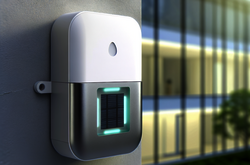
Smart cities rely on sensors to monitor air quality, traffic flows, noise levels, and other urban parameters in real time. But most devices run on disposable batteries or expensive cabling. EMPOWER#IoT designs solar-powered sensors that can operate even in the shade or under streetlights, reducing installation and maintenance costs and producing less waste.
 

ERDF funding : 499 349.51 € of a total of 1 390 073.85 €

Learn more

Tools for collaborative energy management in industrial parks

  • Period: 01/01/2026 to 31/12/2028

FLEX-E will help industrial parks reduce costs and CO₂ emissions through smarter energy management. Tested in industrial parks in France and Germany, the project develops AI tools that enable companies to collaborate securely and provides models and practical guidelines to improve efficiency and competitiveness.

 

ERDF funding: 497 818.99 € of a total of 995 637.97 € 

Learn more

A long-range drone powered by clean energy to analyze fire smoke

  • Period: 01/01/2026 to 31/12/2028

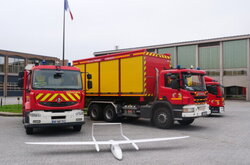
The HEDRAF project is developing an innovative drone capable of tracking and analyzing fire smoke for five hours using a clean propulsion system combining hydrogen, batteries, and solar energy. By providing firefighters and public authorities with reliable data, the drone will help better protect populations and strengthen cross-border cooperation, which is essential in cases of air pollution in the Upper Rhine region.
 

ERDF funding: 499 978.90 € of a total of 999 957.81 € 

Learn more

Imitation MAchine for Robotic Assistance

  • Period: 01/01/2026 to 31/12/2027

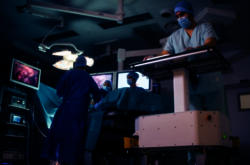
The IMARA project is developing a robotic platform for the operating room, combining an autonomous mobile robot to transport equipment with a robotic arm that learns by imitation from nurses’ gestures. It relieves healthcare teams of time-consuming and error-prone tasks, freeing up time for patient care while enhancing the safety of procedures.
 

 ERDF funding: 478 367.40 € of a total of 956 734.80 € 

Learn more

Quantum technologies for precision medical imaging and diagnostics

  • Period: 01/01/2026 to 31/12/2028

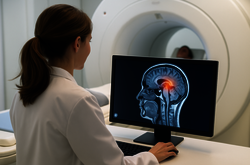
QUANTUM-PRECISION aims to improve the detection of cancer and Alzheimer’s disease through next-generation MRI based on hyperpolarization, a quantum technology that amplifies the signals of disease markers. The project’s goal is to enable earlier diagnosis, precise therapeutic monitoring, and personalized treatments for patients in the Upper Rhine region.
 

 ERDF funding: 499 930.33 € of a total of 999 860.66 € 

Learn more

Connected sensors for precision viticulture in the Upper Rhine region

  • Period: 01/01/2026 to 31/12/2028

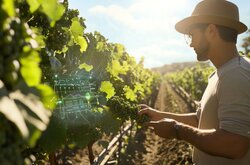
VitiSense develops early detection tools for wood diseases affecting prestigious vineyards in the Upper Rhine region. These diseases can remain invisible for years and cause significant losses. The project combines an optical sensor that detects early leaf stress with a portable MRI system that visualizes the inside of vine trunks, helping to sustainably protect vine health and yields.
 

 ERDF funding: 499 070.74 € of a total of 998 141.47 € 

Learn more

Upper Rhine Quantum Valley

  • Period: 01/01/2025 to 31/12/2027

The UpQuantVal project aims to better harness the unique innovation potential in quantum physics and quantum technologies in the Upper Rhine region. To achieve this, it fosters closer and more effective exchange between actors from science, industry, and public administrations through a structured network that will be strengthened via joint training activities.
 

ERDF funding: 2 292 564.78 € of a total of 5 161 817.56 € 

Learn more

Ddevelopment of a closed-loop two-phase heat exchanger based on the thermosyphon principle using environmentally friendly fluids for thermal energy recovery

  • Period: 01/09/2024 to 31/08/2027

In a context where the search for sustainable energy sources is urgent, the project aims to recover and reuse so-called “waste heat” generated by industry and large data centers, which is often left unexploited. This heat could be used to replace more polluting heating systems. In the long term, this recovery and reuse of waste heat could be deployed across the entire Upper Rhine region, representing a major step towards more sustainable energy practices.
 

ERDF funding: 500 000.00 € of a total of 1 000 000.00 € 

Learn more

Integrated surface water management in the Lys river basin

  • Period: 01/07/2024 to 30/06/2028

The FUSION project aims to strengthen the resilience and adaptation of territories to climate-related risks. It promotes climate change adaptation as well as disaster risk prevention and resilience, using ecosystem-based approaches. It focuses on climate adaptation measures and the prevention and management of climate-related risks, including floods and landslides, through actions such as awareness-raising, civil protection and disaster management systems, infrastructure development, and nature-based solutions.
 

ERDF funding: 3 862 862.01€ of a total of 6 438 103.35€

The FUSION project is co-funded by the European Union through the European Regional Development Fund (ERDF) under the Interreg France–Wallonia–Flanders programme, which supports cross-border cooperation. It also receives support from the programme’s public partner authorities in France (including the Hauts-de-France Region) and in Belgium (Wallonia and Flanders). The ICube laboratory, through SERTIT, is involved in the project as a partner.

Learn more

IMAGing in INtellectual disability with Epilepsy for therapeutic brain STiMulation in the Upper Rhine Region

  • Period: 01/04/2024 to 31/03/2027

IMAGINE-STIM aims to contribute to the development of neurostimulation, an innovative therapy for patients with epilepsy and intellectual disability, by establishing a cross-border Franco-German care network. In collaboration with centres of excellence specialised in epilepsy treatment and imaging, as well as the University of Strasbourg and the CNRS, the project seeks to further improve existing brain stimulation techniques to enable more personalised treatments. It also plans to set up a video forum to facilitate knowledge transfer on these new therapeutic advances.
 

ERDF funding: 499 911.23 € of a total of 999 822.46 € 

Learn more

The future of 3D body scanning in orthotics

  • Period: 01/04/2024 to 31/03/2026

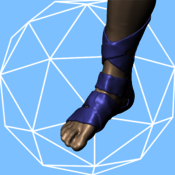
In the context of ankle orthosis manufacturing, a process that is still time-consuming and prone to inaccuracies, the HelpMeWalk project aims to bring about a technical breakthrough in measurement collection through a smart bandage equipped with magnetic sensors. This device captures the exact anatomical shape and then enables the 3D printing of a fully personalized orthosis.
 

ERDF funding: 467 741.00 € of a total of 1 350 907.58 € 

Learn more

Promotion and preservation of fortified castles in the Upper Rhine region

  • Period: 15/10/2022 to 31/12/2025

In order to increase the visibility and appeal of the more than 300 fortified castles across this cross-border area for both residents and tourists, around forty institutional partners will come together to share knowledge and expertise. Together, they will implement joint actions in research, cultural mediation, promotion, and civic engagement, with the aim of preserving and enhancing the castle heritage of the Rhine region.
 

ERDF funding: 2 929 793.24 € of a total of 4 997 451.14 € 

Learn more

Interreg projects - 2014-2020 programme period

During the 2014–2020 Interreg programme period, the ICube laboratory coordinated   7 projects and participated in 3 others as a partner.

Deployment of a sensor network for continuous monitoring of pesticides in drinking water

  • Period: 01/09/2019 to 31/08/2023

The project aims to develop and test an autonomous system capable of continuously monitoring chemical pollutants in drinking water. It combines innovative technologies rarely used together in pollutant detection, including pulsed amperometry, time-resolved fluorescence, and nuclear magnetic resonance. The system is designed to remain affordable and easy to maintain.

The project focuses on three major pollutants: glyphosate, atrazine, and polycyclic aromatic hydrocarbons, which are among the most common pollutants in the Upper Rhine region and are known to pose risks to human health. Beyond this initial proof of concept, the system is being developed as a flexible platform that can later be adapted to detect other pollutants.

Prototype development is organised in three stages: validating the measurement technologies, integrating the different sensor components into a single prototype, and incorporating the prototype into an existing platform developed by project partner Bürkert. This final stage will allow the system to be tested directly in drinking water production and distribution facilities.

 

ERDF funding: 495 001.77 € of a total of 1 400 912.86 €

Learn more

Hybrid Li-ion battery and supercapacitor storage system with a variable reluctance synchronous machine for electric vehicles

  • Period: 01/10/2019 to 30/09/2022

Energy storage systems remain one of the main limitations of electric vehicles: they are expensive, offer limited driving range, require long charging times, and can degrade quickly. Current research therefore focuses on developing new energy storage solutions that improve range, extend battery lifespan, and reduce total cost of ownership (TCO).

One promising approach is the hybridisation of energy sources. The idea is to combine two complementary storage technologies: a high-energy source for primary power supply and a high-power source to support peak demand. This hybrid system makes it possible to take advantage of the strengths of both technologies while offering greater flexibility in system design.

The VEHICLE project focuses on developing intelligent energy management strategies based on advanced algorithms. Using a reference electric vehicle equipped with a hybrid storage system combining Li-ion batteries and supercapacitors, together with a variable reluctance synchronous machine, the project develops multiphysics models and evaluation tools to optimise energy flows, extend battery lifespan, and reduce overall operating costs.
 

ERDF funding: 496 626.19 € of a total of 993 252.39 € 

Learn more

Virtual Innovative Real Time Factory → Supporting the transition to Industry 4.0 through smarter production planning

  • Period: 01/10/2019 to 30/09/2022

As production systems become increasingly digitalized, manufacturers can monitor and analyze their operations more precisely than ever before. Digital tools now play a central role in the reconfiguration, optimization, and evolution of production systems by linking data collected at different levels of the factory to overall industrial performance. Combined together, these tools function as a virtual factory.

These virtual environments make it possible to anticipate the impact of external changes on existing production systems and to evaluate possible responses before they are implemented.

Working with companies involved in Industry 4.0, the VIRTFac project is developing a platform that connects company data to the components of a virtual factory. A demonstrator integrating the platform and virtual factory tools provides functions for information, experimentation, services, training, and research. It supports companies with different levels of digital maturity in planning the evolution of their production systems, while also addressing new research challenges linked to the integration of advanced manufacturing technologies.

The demonstrator is accessible online, making it possible to raise awareness of these concepts and provide training for a wide range of audiences.
 

ERDF funding : 499 998 €of a total of 960 289.10 €

Learn more

Endurance LOW COst Drone

  • Period: 01/04/2017 to 31/03/2020

The ELCOD project, selected under the 2016 Offensive Sciences call for projects, aims to develop a low-cost drone with long endurance and extended operational range. In the Upper Rhine region, such a system could support applications including crop and environmental monitoring, pollution measurement, and road traffic observation.

On a broader scale, the drone could also be used for border surveillance and maritime monitoring, including fisheries and offshore wind farms.
 

ERDF funding : 495 958.94 € of a total of 991 917.88 € 

En savoir plus

Highly available cross-border smart factories in the Cloud

  • Period: 01/04/2017 to 31/03/2020

Unexpected machine or production tool failures can have a major impact on business competitiveness. The HALFBACK project, selected under the 2016 Offensive Sciences call for projects, aims to design and develop a digital tool capable of anticipating production equipment failures, optimizing maintenance planning, and identifying available outsourcing solutions.


ERDF funding: 467 917.85 € of a total of 935 835.70 € 

Learn more

Simple Printed Interactive Robotics for Interventional Therapy and Surgery

  • Period: 01/04/2017 to 31/03/2020

The SPIRITS project, selected under the 2016 Offensive Sciences call for projects, aims to develop a robotic system for image-guided surgery and interventional radiology. The project includes several innovations, such as a tactile transducer, a smart needle, new 3D printing techniques, and novel actuators and robotic systems.
 

ERDF funding: 434 936.60 € of a total of 1 590 038.82 €

Learn more

Biomechanics of the cranio-encephalic and cervical system

  • Period: 01/03/2017 to 29/02/2020

The HNBI project, selected under the 2016 Offensive Sciences call for projects, aims to develop a numerical model capable of simulating injuries affecting the head and neck system. The project will support the development of new testing methods for protective helmets, including consumer information and safety standards, as well as the design of new helmets for sectors such as automotive, motorcycling, horseback riding, and defense. It may also lead to applications in forensic medicine.
 

ERDF funding:  451 363.06 € of a total of 902 726.13 € 

Learn more

Organic photovoltaic panels for roofing elements in commercial, industrial, and logistics buildings

  • Period: 01/03/2017 to 29/02/2020

The PROOF project, selected under the 2016 Offensive Sciences call for projects, aims to deploy organic photovoltaic technology in commercial and industrial buildings. The project focuses on integrating this technology into waterproof roofing membranes and translucent roof elements such as skylights and roof domes.

It also evaluates the performance of these solutions compared with existing technologies and analyzes their economic potential.
 

ERDF funding: 497 615.26 € of a total of 995 230.52 € 

Learn more

Strengthening sustainable management in private forests across the Greater Region and its natural heritage

  • Period: 01/01/2017 to 30/06/2022

The main objective of the Regiowood II project is to promote sustainable and resilient management of private forests across the Greater Region in response to the growing impacts of climate change. The project aims to improve knowledge of forest conditions, anticipate health and climate-related risks, and promote adapted forestry practices that support the renewal of forest stands.

By strengthening cross-border cooperation and knowledge sharing, the project contributes to preserving biodiversity, promoting local forest resources, and ensuring the long-term sustainability of forest ecosystems.
 

ERDF funding: 2 954 884,36 € of a total of 4 924 807,26 € 

The Regiowood II project is co-funded by the European Regional Development Fund (ERDF) under the Interreg V A Greater Region program, which supports cross-border cooperation between France, Germany, Belgium, and Luxembourg.

Learn more

Optimal Recycling of Reclaimed Asphalt Pavement

  • Period: 01/11/2016 to 31/12/2020

The Upper Rhine region has a dense and heavily used regional road network, generating large quantities of reclaimed asphalt aggregates. Through extensive knowledge sharing and research activities, the ORRAP project aims to improve the recycling of these materials in order to reduce environmental impacts such as CO₂ emissions, energy consumption, use of fossil resources, and asphalt waste production, while also lowering road maintenance costs.
 

ERDF funding: 617 280.51 € of a total of 1 394 497.67 € 

Learn more

In close collaboration with

Logo INRIA
Logo INSERM
Logo IHU
Logo Hôpitaux Universitaires de Strasbourg

With the support of our partners

Logo France 2030
Logo Investissements d'avenir
Logo ANR
Logo Union européenne
Logo Région Grand Est
Logo Institut Carnot